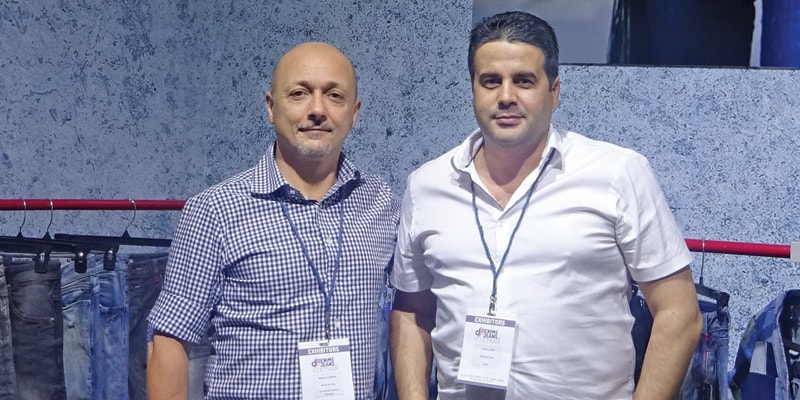
Denim is perhaps the most versatile fabric in the world; the brands and retailers expect the jeans manufacturers to present new finishes/washes almost every second day, but that is not the only challenge they face as they also have to face the trials of sustainability. Demco Vina, Vietnam run by an expert Tunisian management team under the leadership of Elkef Yassine, as CEO prides itself in being one of the market leaders in jeans, capable of handling highly complex production and finishes/washes whilst retaining environmentally-friendly standards. Realizing the importance of collaborating to grow, the original owner of Demco Vina sold the company to Hong Kong-based Royal Spirit Group, a global trading and sourcing company with its own brands and manufacturing units in 2014, this added further edge to the company, as a leader in premium jeans. In conversation with Team Apparel Online, Yassine shares the strategy behind the success.
 With the acquisition of Demco Vina, one of the top denim producers in Vietnam, the Royal Spirit Group took a major leap in its transformation from trading to manufacturing. The Group entered Vietnam in 2007 with a vision to create a green fashion factory project, but they also wanted to manufacture denim, which brought them to Demco. Impressed with the quality, systems and the team, they negotiated to be a partner and finally took over. So, now Royal Spirit in Vietnam is providing to the global customer – knit factory, fashion factory, sweater factory, denim factory, dyeing factory, washing factory and digital print factory,” informs Yassine. Royal Spirit also has its own brands which are fed by these manufacturing units.
For Demco, the merger brought in resources to invest in European technologies and machinery for the denim factory and laundry. With the marketing and sourcing forte of Royal Spirit and the enhanced manufacturing strengths of Demco Vina, the products coming out of the factories are securing shelf space in many leading stores in all major countries around the world, with brands like VF Lee, Quiksilver, Garcia Jeans, Perry Ellis and s.Oliver as regular clients. “Since, Royal Spirit also owns brands in US: Carlise & Etcetera and Germany: Toni Dress & Rosner, so we become producer for ourselves, and our group. The synergy between the two companies has resulted in 100 per cent turnover increase in 2015, with expectation of another 100 per cent increase in 2016 from the 2015 figures, implying that by the end of this year we will have grown 4 times more than what we started off with in 2014,” says Yassine with pride.

The company currently has a capacity to manufacture 2,00,000 pieces per month, with in-house capacity of 4,00,000 pieces in washing, a part of which is offered to other producers. By 2017, Demco Vina is looking to have capacity of 4,00,000 pieces per month in sewing and 6,00,000 pieces in washing.
“The goal is to have capacity of 6,00,000 pieces per month for sewing and 1 million pieces in washing by end of 2018, so that we can provide washing facilities for even our competitors,” says Yassine. He adds, “Denim is our forte and we try not to be cheap, but built in value for every cent we charge and provide consistent quality.”
Flexible and latest technology keeps Demco ahead…

The company has successfully created a flexible system to cater to product and market needs of different clients. “Some customers are more focused on material, some on washes, some on clean finishes, and some on value adds… It’s different requirements for all, but you cannot make different systems for each one as it will be a mix up. So, we build the most difficult one in a flexible way, so that it matches with all requirements,” shares Yassine. Demco Vina uses state-of-the-art manufacturing technologies right from the spreading process to washing and finishing processes. The company uses Gerber Technology for computerized pattern marking and automatic spreader for spreading of fabric. With the use of semi-modular lines, and lean manufacturing principle, Demco Vina manufactures the flexible way, keeping track of the hourly production status of every line through an online production display board. The facility also has equipments like fork lift to manage the transportation of raw materials at the warehouse. Amongst many other newly developed technologies, Demco Vina also uses the “No So Framis Italia Thread Free” garment construction technology.
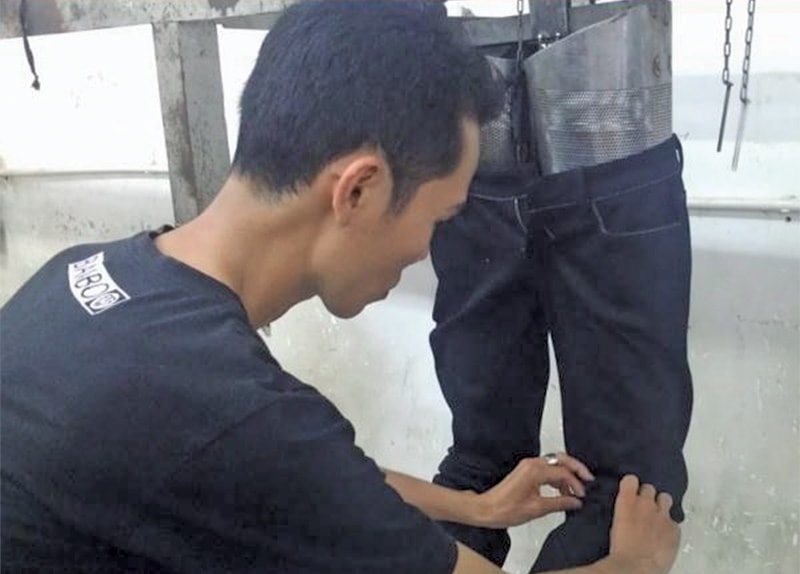
The company is one of the first denim manufacturing houses to incorporate the revolutionary Tonello’s G1 420 LW2 – No Stone System and E Flow System in their wet processing. The dyeing process at the factory is accomplished through Tonello’s G1 510 HJ 1 with Core and Mago Technology for drying process. Core is a new technology that is capable of creating uniform or contrasting effects that go beyond fleeting fashions to bring out the full potential of the garment. Core makes it possible also to apply a wide range of products, while considerably reducing consumption. Mago is a remote assistance service which works on Machine2Machine communication principle that allows solving any malfunction or, even better, to prevent them. With Mago, Demco Vina is directly connected with Tonello Research Center experts and receives customized consultancy on how to treat the garment.
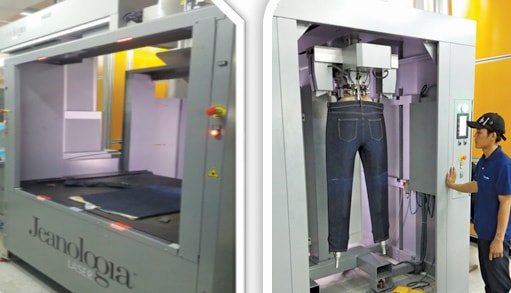
Demco Vina uses latest machinery such as washing machines from Lapauw of Belgium, and Tolkar from Turkey. To be a leader in Eco Washes Demco invested in the Eflow technology from Jeanologia Spain which reduces use of water by 90 per cent. Demco invested in best lasers in the world: the Flexi HS from Jeanologia and the Black Dragon 6 tables from VAV Turkey; the company also uses Ozone wash G2 from Jeanologia with a wide range of denim finishing effects available as PP spray, scraping, coated effects, cold dye, digital print, etc.
Working on collaborative supply chain model…

The two core areas of concentration to ensure innovation, are good sourcing capability and good development capabilities because the market needs development at every level – right from fabric to finish to wash. “We have developed and nurtured our supplier base to look from the customer’s perspective and develop fabrics with us, as this is the only way to grow and we are getting more partners who believe in us,” avers Yassine, adding that being a part of a big group gives an advantage to the complete chain. The company is also working with many consultants around the world to have the right advice on how to be the best competitor in terms of price, technology and sustainability, along the supply chain. As a company policy, Demco never refuses any product and instead explores how the product can be made; once it is made, it becomes a learning experience for the factory.
Building in-house ERP for effective work flow…

The company has developed its own in-house ERP to get a clear picture of the process in real time, production, purchase, cost, finance, and human resources. “With due respect to all the ERP makers in the world, they have not yet made a perfect ERP for this sector,” argues Yassine. Explaining the complexity of the garment manufacturing process, Yassine reasons, “We receive our fabric from suppliers. From roll fabric it becomes a layer, and then it is transferred to a block, and later it is cut. It becomes a bundle, which is then put in line, to become a garment; so the unit keeps changing. I start with a roll and finish with a garment, and I have not yet finished. In the laundry, it can be done by piece, but then there are people who do it by load – 100 pieces in a load. Then in finishing, it becomes one piece and in the end it becomes a carton, which can be in multi-size or in one size. The unit changes in the whole process, from a roll to the carton, and this complex change in form and dimensions should be ‘handleable’ by an ERP.”
In short, there are too many variables and options to be handled by a standardized ERP system, hence it was a conscious decision to develop and keep evolving on an in-house ERP system.
“The better the IT team is aware of the garment sector, the better the ERP they will be able to create. The language is not an issue,” reasons Yassine.
Motivation for employees, the foundation of efficiency…
Acknowledging that human resource is the backbone of efficiency, Demco has in place a four-structure motivation/encouragement incentive. The first incentive is for individual encouragement based on personal efficiency; second is a bonus for the line altogether, because what is selling is not just one operation, but the whole garment. Once the line is motivated, the whole line will work in sync, helping each other to meet the target of the line. The third incentive initiative is on ranking system, on a group or line basis to create a competition amongst the lines; and the fourth incentive is targeting absenteeism. “On an average day, there is at least 5 per cent absenteeism, and to counter that there are 10 per cent multi-skilled people waiting to replace them. But the person, who is multi-skilled, doesn’t have a chance to have better efficiency, because he keeps shifting jobs. So when you give special attention to the multi-skilled people, you give them what they lose in efficiency, which is usually at 60 per cent, as they help and save your productivity. Also, workers who feel they can do better and also wish to be trained for other jobs too, also get this last incentive,” shares Yassine.

The workers have a clear transparency of the salary they will receive at the end of the month, and what they can earn on top of that. This way, an environment is created in the factory where people are willing to grow, to be better. All workers are involved as they will work as a team. All the workers are encouraged to share their problems, as the company believes that a combination of technology and motivated workers is the only way to achieve targets in a highly competitive environment.