Giving exactly what the customer wants is what defines ‘Quality’ in a simple language. In the garment industry, this ‘want’ is built around several quality parameters like durability, look and comfort.
Every customer, big or small, has always preferred working with a garment manufacturer or supplier who produces a quality product. In fact over the years, quality has been the prime responsibility of the exporter. And it still is.
However, today the onus of delivering a quality product and service does not lie only with the exporter. An apparel buying house too is equally responsible as a garment exporter. Some of the buying houses prefer calling themselves allies of their vendor – a customer is as important to them as it is to a garment factory.
Lately, lots of buying houses have started bridging the gap between brands and factories. They are no longer a mediator between apparel buyers (retailers) and apparel manufacturers (export houses, garment suppliers). Buying houses today act as the ‘business partners’ of not only the clients, but also the export houses. The relationships among buyers, buying offices and vendors have gradually changed from hierarchical relationship to collaborative partnership.
This relationship is based on mutual trust and is productive for all involved. Through this partnership, the buying office mediates the opinions of the buyer and the vendor, and thus can specialise in the distinct task of creating a balance between buyers and vendors.
One of the buying houses has indeed vehemently advocated the concept of developing a better vendor rather than going on a mission to find a better vendor. Today, a good buying house with its inherent knowledge of the industry helps transforming a ‘not so good’ vendor to a ‘good vendor’, and a ‘good vendor’ to ‘a great vendor’.
They have to understand all the challenges faced by the exporters and need to help them to overcome those challenges, while at the same time ensuring that together they fulfil all customers requirements.
Team Apparel Resources spoke to some of the distinguished buying houses in Vietnam and got an insight into the quality practices and measures adopted by these far-sighted business partners with the objective of meeting every customer expectation – and sometimes even going beyond these expectations.
Delighted at the way Vietnam is growing each year, they were unified in accepting that the country makes high-end products with quality that is superior to those from countries which produce basic items. The industry is growing and with it the country too is growing.
Asmara Vietnam: An inspiration for many…
Their continual focus on quality and training has today made them one of the ‘bigwigs’ in business.
Since its inception in the country in 2008, Asmara Vietnam – one of the leading buying houses in Vietnam – has been a name purely associated with trust and quality. It’s never easy to build an image and then retain it successfully and the man who has been instrumental in taking Asmara to a position where it is today is the young and exuberant Anil Mishra, Country Manager, Asmara – Vietnam.
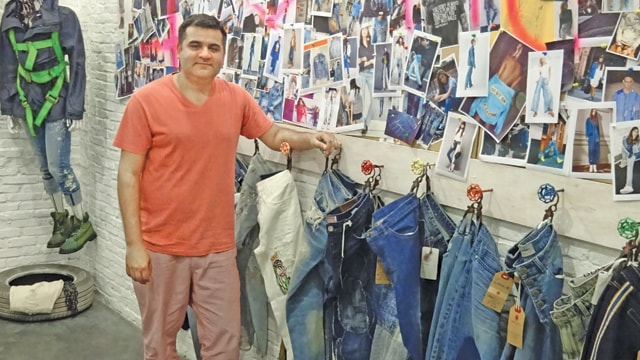
Working for over 45 suppliers, the three major product categories that Asmara mainly sources from Vietnam are outerwear, bottomwear and contemporarywear. “When we started this company, I specifically chose outerwear as the category because we could count on our fingers how many countries in the world can do outerwear – not many countries can do heavy jackets; As far as outerwear is concerned, value-wise it is 50 per cent and volume-wise it is 30 per cent. Bottomwear is our second main category, which is value-wise 30 per cent and volume-wise 50 per cent. By 2011, things were changing and we were by then 10 per cent cheaper than China,” averred Anil.
Training processes constitute the core strength
With an astounding annual turnover of US $ 105 million from Vietnam alone in 2017, the company is close on the heels of its Bangladesh and India units, which have generated US $ 113 million and US $ 127 million, respectively.
“Since last three years, our growth has been very good and we are expecting 40% hike. Asmara Vietnam has to take the lead for the next 2 to 3 years and consistently grow at 40%; then only the Group as a whole can grow,” reasoned Anil pragmatically.
The company’s growth strategy also includes taking away the business from China and bringing it to Vietnam. He corroborated on this saying, “Anything that can be done in China can also be done in Vietnam, so south-east Asia is never a competition. It is China which is our competitor.” This confidence breeds from the excellent quality and training processes that Asmara has been synonymous with all these years.
While conforming to the principle that duplication of any work is not good, Asmara believes that nothing precedes customer happiness. When the suppliers fail to satisfy all the criteria, Asmara tries to bridge the gap.
Interestingly, Anil classifies business management into financial management, order management and product management. “We finance all the business. We can define our different payment terms because of our buying power. Then comes order management. It’s all about T&A and merchandising and product management is something that is technical. Factories here are very strong in manufacturing but not in how the product has been developed and how the order has been generated and we bridge that whole knowledge gap. That’s how we justify our position,” explained Anil.
Very few buying houses have accomplished this in Vietnam and Asmara has been doing it more consistently and more successfully over the years.
Importantly, Asmara Vietnam also stands out owing to its ability to source 12 collections per buyer a year. This is not new; Asmara Vietnam has been into this practice ever since it entered Vietnam. “Ten years back, in 2008, it was almost impossible for anyone to believe about a business of 12 collections, as until then factories knew about 2 or 4 collections only,” Anil recalled.
The first and foremost thing that Asmara Vietnam did, to break this paradigm, was to approach the best schools of fashion in Vietnam and to train the students so as to make them understand the relevance of fast-fashion cycle.
Concepts of how significant product development and delivery are, were explained in detail to shape the young minds. “Lead time, product development, faster cycle and R&D are integral to Asmara’s DNA. Gradually we carved a niche for ourselves here,” Anil said.
Quality inspection is of foremost importance
The average age of the strong Asmara team which comprises of 142 people is today 29 years, and they all belong to 10 different nationalities which include Indians, Germans, Italians, French, Dutch, Filipinos, Cambodians, Sri Lankans, and Japanese, besides Vietnamese. At the core, lies the product and as a thumb rule, Asmara provides quality-inspected products on time to its buyers.
Asmara Vietnam deploys dedicated quality assurance executives at all its factories to conduct production and planning meetings and SOP follow-ups. It also conducts several training programmes to keep the team abreast of the latest developments in the field of fashion and resources. “We bring together personnel from factories in different regions and do the brainstorming sessions,” maintained Anil while stressing on how factories are made a part of the process instituting paradigm shifts.
Here one must talk about the Asmara Knowledge Bank project – an ambitious project that was commenced on similar lines – which includes training modules for developing product knowledge of all the youngsters who join the trade, even from the buyer’s end, with zero knowledge.
As the Country Manager himself averred, “Buyers give us orders and so they need to know about manufacturing and have to gain product knowledge as an integral part of the supply chain. So there are many more reasons to impart training at the entry level and to keep the system agile.”
Expansion plans…
Going forward, after having offices in HCM City and Hanoi, Asmara plans to open its new office in Danang in Central Vietnam in 2018. In addition, there are also plans to operate Cambodia from Vietnam. “Today 25 per cent of our business is coming from USA and 20 per cent from Canada. Now, we have also started business with Australia and Japan. In Europe, it is mainly Italy, Germany, Sweden, Spain and UK that we deal with. Vietnam is growing and this is the best time to be here. Therefore, the focus is to go deep into the product and maintain it and thus efficiency level gets enhanced, which justifies our strong prices. Lots of things have been done and there is also hunger and drive to do more things at a faster pace,” concluded a cheerful and optimistic Anil.
Newtimes: Excelling in impressing upon quality and making better vendors
Bringing out the best from your available resources and then grooming them to reach the zenith of success is what epitomises excellence. At Newtimes, they have been believing in this ideology for years – and doing it successfully too.
In an exclusive tête-à-tête with Team Apparel Resources, Roshan D Souza, Technical Manager (Washing), Newtimes Vietnam, said with conviction, “We do not find better vendors, we make better vendors. Conviction comes with confidence, and confidence comes with quality and service, which is nothing new to Newtimes.”
Efficacy in exceeding own projections
The company had an impressive annual turnover of US $ 187 million in 2017, which was much higher than that projected at the start of the last year – US $ 165 million. It was the same story in 2016 when the company had projected US $ 110 million and ended up achieving US $ 125 million. Now, it’s not surprising for a company like Newtimes to beat its own projection – and that too consistently – considering its commitment to understand its vendors as well as its clients.
This year, the company is eyeing a turnover of US $ 220 million. So are they going to get it again?
“The business is growing a lot in Vietnam and we too are growing with it. We listen to our vendors and help them overcome their problems, much in the same way we understand our customers and so all of them love working with us,” averred Roshan with a smile that reflected more of credibility than pride.
Customer needs always on the priority list
Any customer, irrespective of wherever you are and whatever you do, prefers associating with firms that stay with them till the final delivery of the product. It is here that Newtimes as a leading buying house scores over others. It is a good service provider to the brands beginning from the development of raw materials to product development. Specifically while developing a product, the company offers fabric development, trim development, product and tech design, pattern making, wet and dry processing, seasonal trend forecast and it doesn’t end there.
The company actively involves itself in the planning and managing of production processes, the provision of market and trend information to the customers and, finally, in shipping consolidation.
Apart from being with the customer at every stage of the supply chain, they have been also actively helping them understand the latest in the industry. Newtimes has been proposing them its own fabrics, trims and also several alternatives for anything that is already existing. “We are business partners in that sense and this is where trust is built among our customers,” maintained Roshan.
Quality assurance service marks the line of differentiation
Most of the buying houses end up just being a good connect between vendors and brands and this is where the difference between ‘the good’ and ‘the best’ lies. So, while buying houses are dedicated to deliver quality products to the brand, they should also ensure factories do not face any problem.
The team at Newtimes understands a factory’s inability to work on an order and also analyses the problems faced by the factory leading to its inability to develop a product. The appropriate solutions are then provided to the factories and accordingly brands are informed about the challenges and the solutions. The final prerogative lies with the buyers, whose suggestions are also openly welcomed. This can happen only if you are business partner with both the vendor and the buyer; not many are able to do it — at Newtimes, this comes naturally.
So what does the company do to ensure that good quality product is delivered? In addition to factory’s own quality control team, Newtimes has a highly dedicated team of quality assurance executives who ensure everything is checked thoroughly from the creation of the product to the shipment of the product.
“Once the order is placed for the product, we inspect the fabric; though factories too do their own inspection. In fact we double check sewing, cutting and every other process. Once the pilot run is done, we conduct our own meetings with factories and both of us come with our own internal reports. The reports are matched, checked and discussed. Quality is always at its best when all the minutest details are checked,” underlined the young Technical Manager.
Newtimes Group today operates a network of over 40 sourcing offices and quality assurance hubs in Asia, the Indian subcontinent and the Middle East. The company also regularly conducts audits, based on AQL systems, and it does this as the face of the buyers. A look at the premise and each section clearly gives one an idea that inspections are done by technical staff from their Quality Assurance Department.
Meticulous procedures reduce the chance of any errors
It is noteworthy that the staff is supervised by a highly efficient and experienced management of Newtimes that keeps pace with changing international standards and understands the individual needs of the customers. Such stringent processes and procedures are enough to detect and rectify any potential blemish.
While Newtimes specialises in tailored suits, dresses, outerwear and also in home textiles, denim remains its strongest product category ever. Roshan’s previous experience with a denim giant like Levis has not only helped him in building a strong team but also in taking the company ahead on the road of success and glory – road from where it can achieve anything that is impossible for the client.
Newtimes has reached where it is today owing to its committed approach to being a trustworthy business support for its brands and vendors and it therefore will be no surprise if the company keeps growing and exceeds its annual projected turnover for 2018.
Newtimes actively involves itself in the planning and managing of production processes, the provision of market and trend information to the customers and, finally, in shipping consolidation
Premier Fashion Company Limited: Relentless focus on quality and timeliness
“If you focus on quality and deliver the quality products on time to the customer, you grow and with you the nation too grows,” – these were the words of Md. Jamaluddin Razvi, CEO/General Director, Premier Fashion Group, Vietnam while talking to Team Apparel Resources recently. He said this while emphasising on the rapid strides made by his company in the last decade. Elucidating on this further, he said that quality and timeliness would be of no use if there is no compliance; they all need to be part of the process.
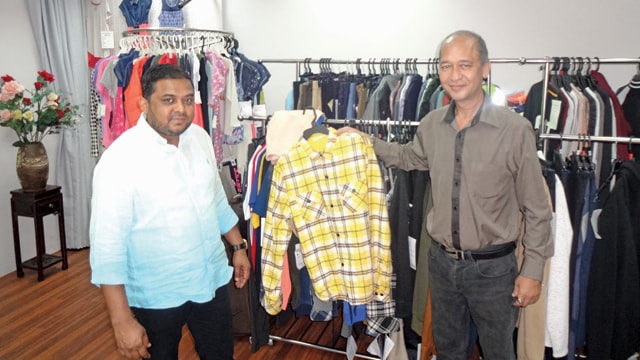
Premier Fashion Group has been into apparel trading business in Vietnam for over a decade and the company today has offices in China, Hong Kong, Bangladesh, India, South Africa, and US. “Though we are active in jackets, we can actually make anything and it is this commitment to deliver anything that our customer needs with exceptional quality that has got us several renowned clients across the world,” proudly claimed Rajendra Singh Negi, General Manager, Premier Fashion Company Limited, while complying with the thoughts of his CEO.
Be compliant. Talk business.
Compliance is part of a process – or process in itself. Most of the buyers today – especially the fashion giants like Walmart, JCPenney or Sears – prefer working with only audited factories that are certified by WRAP or Better Work.
Therefore, compliance has to be a part of the system, if any of the factories desire to work with the esteemed clients. “Our clients like Banjara or TJ Maxx may not stress on working with WRAP-certified factories but would want us to do thorough auditing of factories and also present them with the audit report,” reasoned Rajendra.
It is entirely the buyer’s prerogative to decide whether they ought to go for another auditing by a third-party or to remain contented with the audit done by Premier Fashion Company Limited. Quality, timeliness and price do not hold any relevance until the factory is compliant. “We at Premier Fashion are absolutely focused to ensure that the factories we are associated with are completely compliant,” remarked the General Manager.
Quality is inherent…
Only when quality is inherent in the system, results match the customers’ expectations. Depending on buyer’s requirement, the company prepares a pre-production sample and sends it back to buyers to ensure it exactly matches their requirement. Once confirmed, Premier Fashion tells the factories to make it according to the approved sample.
As an avid Rajendra explains, “We share the specifications and requirements with our quality assurance (QA) team as well. Before starting production, we conduct a pre-production meeting with our QA team, merchandisers and the production team as well as the QA team, merchandisers and the production team of the concerned factory. We then collate all the details with the comments and the tech pack.” Thereafter, the QA team as well as the quality control (QC) team endeavours to perform inline inspection. The team by now is well-versed with all the customer specifications.
After inline inspection, the team also performs pre-final inspection. The team also checks packing, cartons, trims and fabrics and shares the daily report with Premier Fashion. “Our quality process is integrated and so we don’t lose our focus on quality,” asserted Rajendra.
Random audits are also part of the quality process. While these are generally performed by merchandisers or any senior person from the production team, Rajendra too visits the site and occasionally does the auditing. If the team finds something wrong with the product, they will stop it and ask the factory to rectify the defect because once the garment is out, it is always difficult to rectify. In fact, the company ensures that once a defect is detected (depending on the volume of the samples audited), all the products are checked again. Rajendra further added, “It is only our quality that determines the decision of buyers to select us among thousands of factories.”
A well-equipped product development team…
One look at the product development division at Premier Fashion is enough to make one know the relevance of product development in enhancing quality. “The samples made in our sample rooms are sent to the buyers and more often they are approved with minor changes. Sometimes, the buyers may send some designs, but most of the times we prepare samples and send it to buyers for their approval,” said Rajendra.
Quality is everyone’s responsibility – Edwards Deming